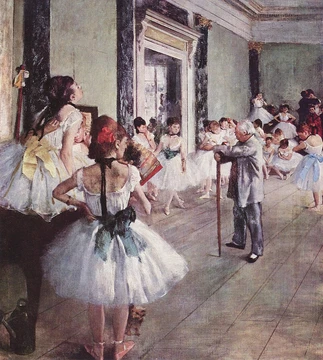
Agnes de Mille
American dancer and choreographer who transformed Broadway dance.

Agnes George de Mille was an American dancer and choreographer who revolutionized musical theater by integrating dance into plot and character development. She is best known for her work on Broadway, particularly the musical Oklahoma!
- born
- September 18, 1905
- died
- October 7, 1993
- field
- Dancer and choreographer
- nationality
- American
- known_for
- Choreographing Oklahoma! and Rodeo; integrating dance into musical theater plot
Lore & Background
Agnes de Mille was born in New York City into a well-connected family of theater professionals. Her father William C. deMille and uncle Cecil B. DeMille were Hollywood directors; her mother was the daughter of economist Henry George. She originally wanted to be an actress but was told she was 'not pretty enough,' so she turned to dance. Despite lacking flexibility and technique, she developed strong character work by observing film stars on her father's sets. Her early career included choreographing for Cecil B. In 1939 she began working with the American Ballet Theatre, creating Black Ritual (Obeah) for its first season—the first representation of black dancers in a New York ballet performance within a dominantly white company. Her first recognized significant work was Rodeo (1942), with music by Aaron Copland, staged for the Ballet Russe de Monte Carlo. Her success there led to choreographing Oklahoma! (1943), whose dream ballet integrated dance into the plot, a groundbreaking innovation. De Mille also wrote extensively, including the memoir Dance to the Piper (1951) and a biography of Martha Graham. She founded the Agnes de Mille Dance Theatre in 1973 and spoke before Congress three times advocating for dance. She was appointed to the National Advisory Committee on the Arts by President John F. Kennedy and later to the National Endowment for the Arts by President Lyndon B. Johnson.
Reader's Guide
Agnes de Mille's significance lies in her transformation of dance in musical theater from mere divertissement to a narrative device that deepened character and plot. Her choreography for Oklahoma! (1943) is widely credited with starting her fame and setting a new standard for Broadway. She also made history with Black Ritual (Obeah) in 1939, featuring black ballerinas in a New York ballet company for the first time. Her advocacy for dance included speaking before Congress and serving on federal arts committees. Her legacy endures through her preserved works and the influence of her integrated approach to choreography.
Did You Know?
- Agnes de Mille was the granddaughter of economist Henry George.
- She choreographed the first ballet for the 'Negro Unit' of Ballet Theatre, Black Ritual (Obeah), in 1939.
- Her choreography for Oklahoma! (1943) integrated dance into the plot, a groundbreaking innovation.
- She was appointed to the National Advisory Committee on the Arts by President John F. Kennedy.
More in Ballet & Dance Masters 1-20
Spotted an error? Know more?
This is a living reference — every entry is fact-audited, and reader corrections feed straight into our audit queue. Suggest an edit · See this site's audit record