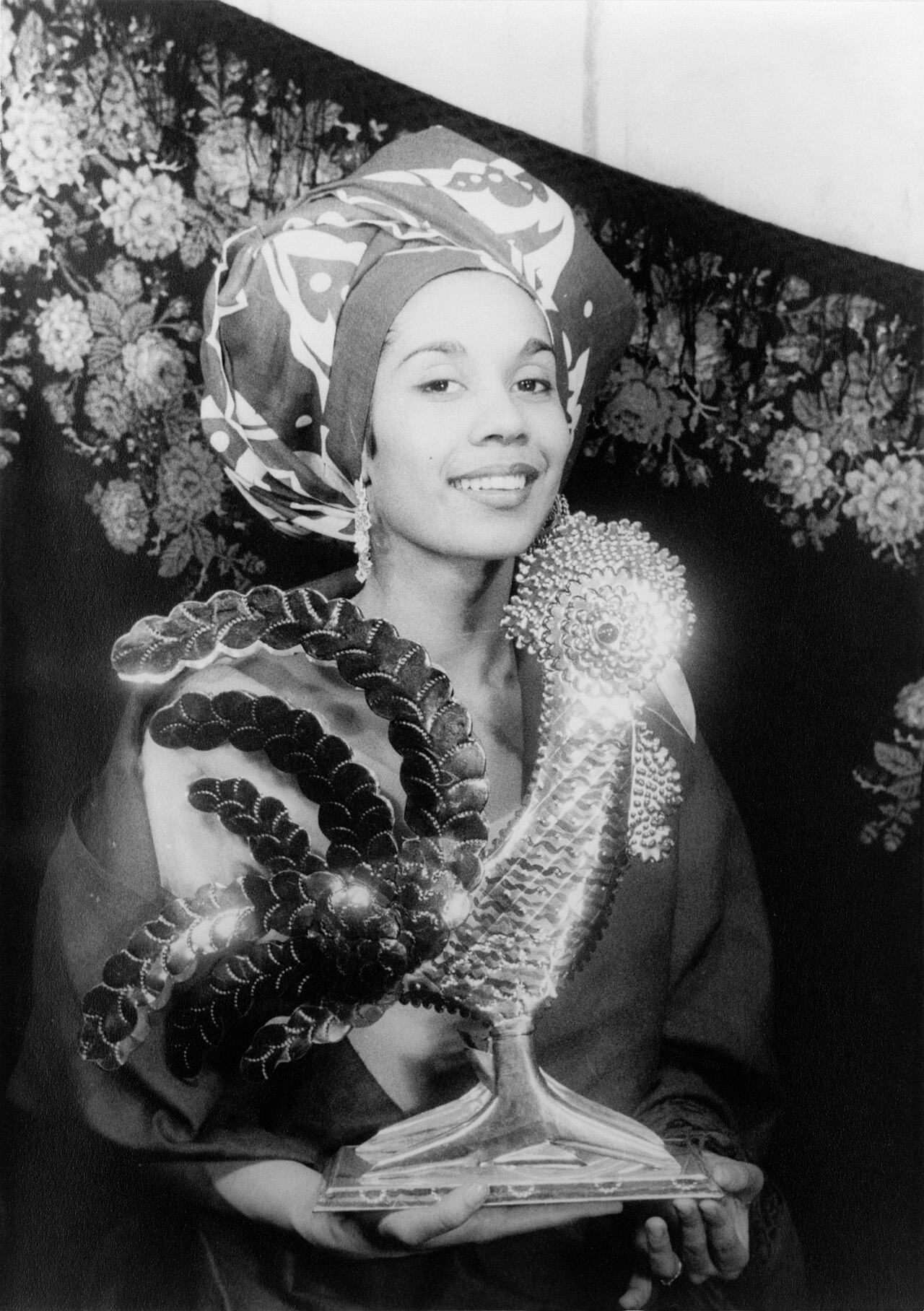
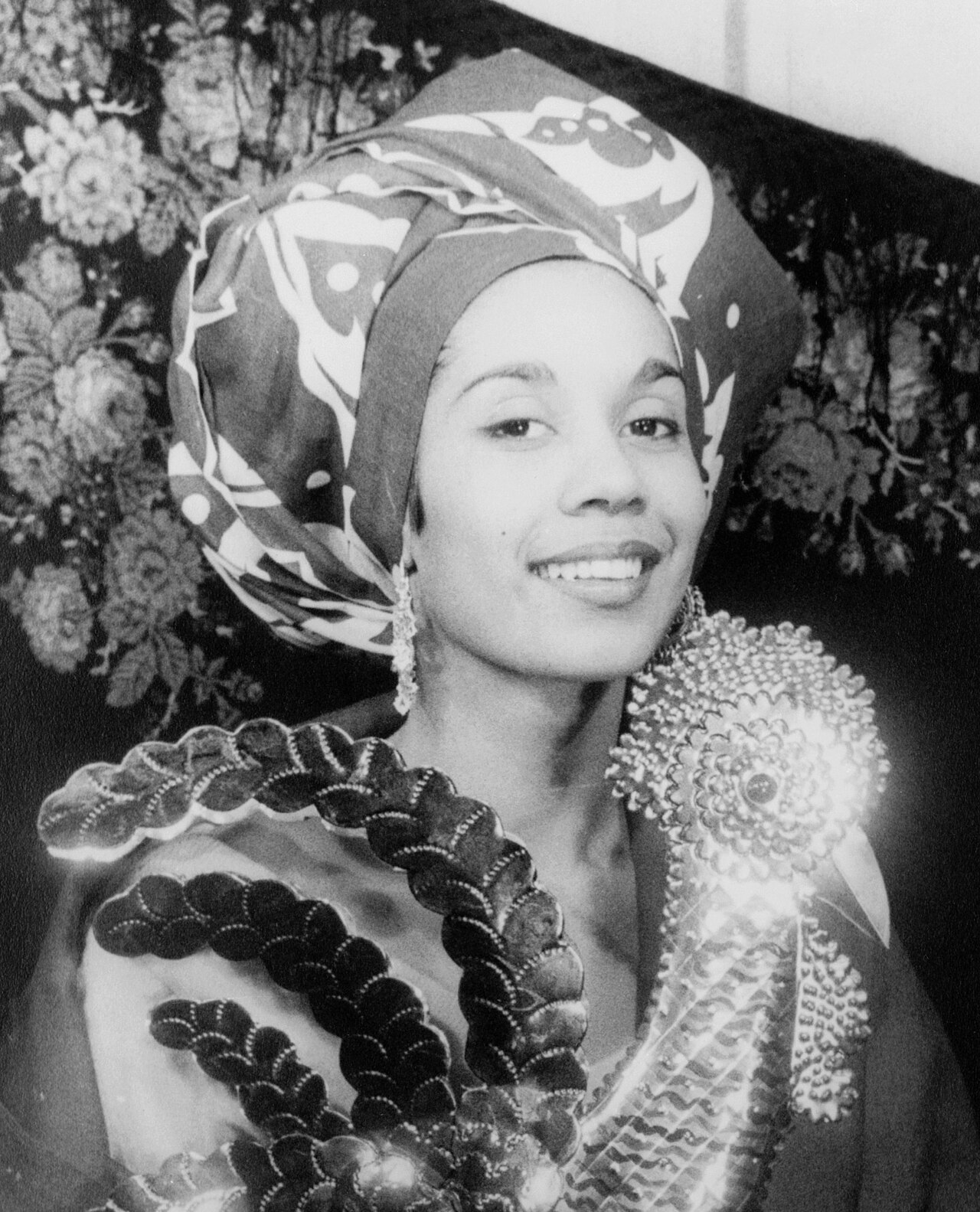
Carmen de Lavallade
American dancer, choreographer, and actress of stage and screen.

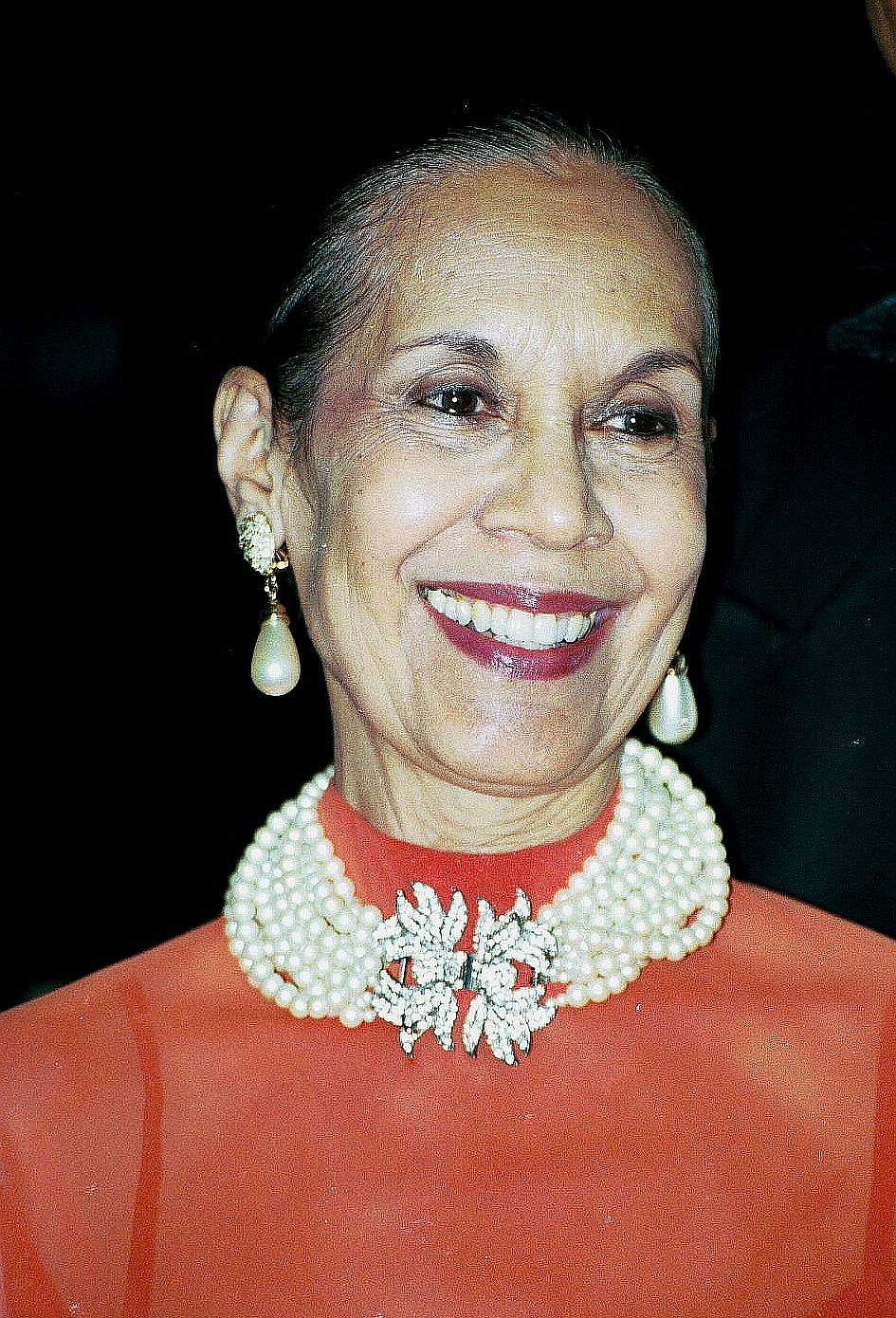
Carl Van Vechten · Public domain
For many years, she was associated with and married to Tony Award–winning actor, dancer, and director Geoffrey Holder.
- born
- March 6, 1931, Los Angeles, California
- field
- Actress, choreographer, dancer
- nationality
- American
Lore & Background
De Lavallade was born in Los Angeles to Creole parents from New Orleans and raised by her aunt Adele, who owned one of the first African-American history bookshops on Central Avenue. Her cousin Janet Collins was the first Creole/African descendant prima ballerina at the Metropolitan Opera. She began ballet at 16 and studied with Lester Horton after high school. That year she made her Broadway debut in Truman Capote's House of Flowers, where she met her future husband Geoffrey Holder. She taught at the Yale School of Drama from 1970, where her students included Meryl Streep and Sigourney Weaver. She died after a short illness at age 94.
Reader's Guide
Carmen de Lavallade's career spanned more than seven decades, bridging classical ballet, modern dance, Broadway, film, and television. As a lead dancer with the Lester Horton Dance Theater and later as a prima ballerina at the Metropolitan Opera, she broke racial barriers in mid-20th-century American dance. Her work as a choreographer and professor at the Yale School of Drama influenced generations of performers. She co-founded PARADIGM, a company dedicated to showcasing mature dancers, challenging ageism in the field. De Lavallade's legacy lies in her versatility across disciplines and her role in expanding opportunities for African-American artists in dance and theater.
Did You Know?
- She was raised by her aunt Adele, who owned one of the first African-American history bookshops on Central Avenue in Los Angeles.
- Her cousin Janet Collins was the first Creole/African descendant prima ballerina at the Metropolitan Opera.
A Romance Born in the Wings of Broadway
In 1954, the young Carmen de Lavallade—born in 1931—crossed paths with Geoffrey Holder during the production of House of Flowers, a musical created by Harold Arlen and Truman Capote. The encounter, which unfolded amid the creative energy of that Broadway show (Holder's own stage debut), would prove to be the seed of a lifelong partnership. The following year, in 1955, the two were married, binding their futures in a union that would endure for nearly seven decades. Their meeting was not an isolated event but part of a broader constellation of artistic connections; it was during this same production that Holder also encountered Alvin Ailey, a relationship that would shape his professional trajectory for years to come. Carmen's entry into Holder's life thus arrived at a pivotal moment, when his world was expanding rapidly through dance, theatre, and the vibrant New York artistic community. What began as an acquaintance in the orbit of a 1954 musical quickly deepened into a romantic bond, and by 1955 the two had committed themselves to a shared existence that would unfold across the decades ahead.
Building a Home in New York
Carmen de Lavallade and Geoffrey Holder made New York City the permanent center of their shared existence, spending their entire lives together in that restless, creative metropolis. Their domestic world was anchored by the arrival of their son, Léo, who became the living thread connecting their private life to the broader artistic community they inhabited. The city that had first brought them together in 1954 remained their home through every subsequent decade, a place where the boundaries between professional ambition and family life blurred in ways characteristic of the New York arts world. Holder's career—spanning principal dance with the Metropolitan Opera Ballet, Broadway direction, film roles, choreography, painting, and composition—meant that their household was never far from the creative process. Carmen existed at the heart of that orbit, a constant presence through the highs of Tony-winning productions like The Wiz and the quieter, more personal work of raising a family. Their life in New York was, in essence, a life lived inside the rhythm of the city's artistic pulse, with Léo growing up immersed in that relentless creative energy.
Carmen & Geoffrey: A Story Captured on Film
In 2005, the story of Carmen de Lavallade and Geoffrey Holder was documented in a feature-length documentary bearing their names, Carmen & Geoffrey. The film offered a rare, intimate window into a partnership that had endured for half a century, capturing the texture of a life built together in New York City since their 1955 marriage. By the time the documentary was made, the couple had weathered decades of artistic triumphs, personal challenges, and the constant ebb and flow of a career that touched dance, theatre, film, and visual art. The existence of the film itself speaks to the significance of their story within the broader narrative of American arts, particularly the Black artistic community in New York. It preserved for posterity not just Geoffrey's public achievements—his Tony Awards, his choreography, his film roles—but the private architecture of a marriage that had produced a son, Léo, and sustained itself through the full span of the twentieth century and into the new millennium. The documentary stands as a testament to a bond that began in the world of a 1954 Broadway musical and grew into something far more enduring.
A Life Spanning an Era
Carmen de Lavallade was born in 1931 and passed away in 2025, a lifespan that carried her through nearly a full century of American cultural transformation. Her years overlapped with the rise of the civil rights movement, the maturation of Black arts institutions in New York, and the gradual opening of doors in theatre, dance, and film for Black artists. She met Geoffrey Holder in 1954 during the production of House of Flowers, one of the early all-Black Broadway musicals, and their marriage the following year placed her at the center of a creative circle that included Alvin Ailey and other trailblazers who would reshape American performance. She lived long enough to see her husband's work recognized with two Tony Awards for The Wiz, to witness the 2005 documentary that told their shared story, and to outlast a career that stretched from the 1950s into the 2010s. Her death in 2025 closed a chapter that had opened in the early days of a new era for Black artistic expression, leaving behind a son, Léo, and a legacy woven into the fabric of New York's creative history.
Gallery
More in Ballet & Dance Masters 1-20
Spotted an error? Know more?
This is a living reference — every entry is fact-audited, and reader corrections feed straight into our audit queue. Suggest an edit · See this site's audit record