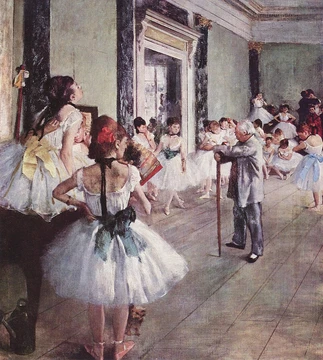
Carlo Blasis
Italian dancer, choreographer, and dance theoretician who codified ballet poses and technique.

via Wikipedia: Choreography · see source
He is known for his influential writings on dance theory and for codifying ballet poses. Blasis developed techniques for specific types of dance during the 19th century, contributing to the development of ballet vocabulary. His work helped shape the art of choreography by specifying human movement and form in terms of space, shape, time, and energy.
- died
- 15 January 1878
- field
- Dancer, choreographer, dance theoretician
- nationality
- Italian
Lore & Background
Carlo Blasis was a ballet master and choreographer of the late 18th and early 19th centuries, following in the tradition of Jean-Georges Noverre and others who developed techniques for specific types of dance. He was among those who helped ballet develop its own vocabulary in the 19th century, alongside choreographers like August Bournonville, Jules Perrot, and Marius Petipa. Blasis is recognized as a romantic ballet choreographer, part of the generation that established the classical ballet vocabulary. His work focused on the compositional use of organic unity, rhythmic articulation, theme and variation, and repetition in dance. It also does not discuss his wife, his students, or the "Pleiades."
Reader's Guide
Carlo Blasis's significance lies in his role as a ballet master and choreographer during the 19th century when ballet developed its own vocabulary. He was one of the romantic ballet choreographers who contributed to the codification of ballet technique. The source indicates that ballet eventually developed its own vocabulary in the 19th century, and Blasis was part of that development alongside other notable choreographers. His work as a choreographer involved specifying human movement and form in terms of space, shape, time, and energy, typically within an emotional or non-literal context. The source does not provide information about specific teaching methods, analysis of pirouettes, or influence on later figures like Enrico Cecchetti. It also does not mention any surviving or non-surviving choreographies.
Did You Know?
- Carlo Blasis was a romantic ballet choreographer, part of the 19th-century development of ballet vocabulary.
- He followed in the tradition of Jean-Georges Noverre and others who developed techniques for specific types of dance.
- Blasis was among the ballet masters who helped ballet develop its own vocabulary in the 19th century.
- He is listed alongside August Bournonville, Jules Perrot, and Marius Petipa as a romantic ballet choreographer.
A Name Among the Romantics
Carlo Blasis occupies a distinguished position in the history of dance as one of the recognized romantic ballet choreographers of the nineteenth century. He is named in the same breath as August Bournonville, Jules Perrot, and Marius Petipa, a grouping that signals the era in which ballet finally developed its own dedicated vocabulary. This was not a minor evolution; it marked the moment when the art form shed its earlier identity as a general theatrical arrangement and became a discipline with its own compositional language. Blasis's inclusion among these four figures places him squarely within the romantic period of ballet, a time when choreography was transitioning from the broader category of staging dance for the stage into a specialized, self-aware craft. The romantic ballet era represented a maturation of the form, one in which choreographers were no longer merely arranging movements for social or theatrical purposes but composing dances as distinct artistic works. Blasis stands as a representative of that pivotal generational shift in the art of movement design.
Inheriting a Theatrical Legacy
Before the nineteenth century gave ballet its own vocabulary, the role of shaping dance for the stage had a long and layered history. In the seventeenth and eighteenth centuries, the separation between social dance and theatrical performance became more pronounced, and the figure of the ballet master evolved into what was described as the 'arranger of dance as a theatrical art.' Masters such as Jean-Georges Noverre, Gasparo Angiolini, Jean Dauberval, Charles Didelot, and Salvatore Viganò each developed techniques for specific types of dance, building a tradition that would eventually give rise to the romantic era. Carlo Blasis entered this lineage as a choreographer working within the newly self-aware ballet vocabulary of the nineteenth century. His work thus sits at the intersection of two eras: the inherited craft of theatrical dance arrangement and the emerging discipline of ballet as a distinct compositional art. The progression from those earlier arrangers to Blasis and his contemporaries represents a fundamental shift in how movement was conceived, specified, and performed on the concert stage.
The Architecture of Movement
Choreography, the art in which Blasis worked, is fundamentally the design of sequences of physical movement in which motion, form, or both are deliberately specified. The choreographic process involves specifying human movement and form in terms of four essential dimensions: space, shape, time, and energy. These specifications typically operate within an emotional or non-literal context, meaning the resulting dance communicates meaning beyond mere physical execution. The compositional aspects that a ballet choreographer draws upon include organic unity, rhythmic or non-rhythmic articulation, theme and variation, and repetition. The choreographic process may also employ improvisation as a tool for developing innovative movement ideas before they are fixed into a performed sequence. For a nineteenth-century romantic ballet choreographer like Blasis, these principles would have governed the construction of dances intended for concert performance, where the design itself, sometimes called dance composition, was the primary artistic product.
Ballet as a Movement Language
Within the broader landscape of choreography, ballet occupies a specific and historically significant position as one of the movement languages from which choreographers draw. The art of choreography takes its movement vocabulary from a range of sources, including ballet, contemporary dance, jazz, hip hop, folk dance, techno, K-pop, religious dance, and even pedestrian movement, or combinations of these. For a romantic-era choreographer, ballet was not merely one option among many but the primary and most developed of these languages, having just acquired its own dedicated vocabulary in the nineteenth century. The choreographies designed in this tradition were generally intended to be performed as concert dance, distinguishing them from social or purely functional movement. The word 'choreography' itself, derived from the Greek for 'dance-writing,' originally referred to the written record of dances before its meaning shifted to encompass the composition of movement sequences. Blasis worked within this evolved understanding, where the design of the dance was itself the artistic act.
Gallery
More in Ballet & Dance Masters 1-20
Related in Ballet & Dance Masters
Links follow this subject's own source article.
Spotted an error? Know more?
This is a living reference — every entry is fact-audited, and reader corrections feed straight into our audit queue. Suggest an edit · See this site's audit record