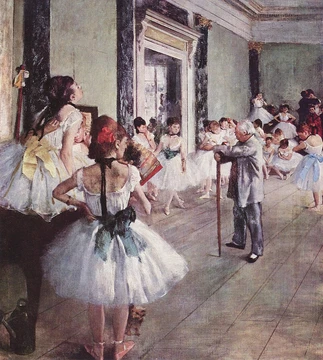
Galina Ulanova
Russian ballet dancer, frequently cited as one of the greatest ballerinas of the 20th century.

via Wikipedia: Galina Ulanova · see source
Galina Sergeyevna Ulanova (8 January 1910 – 21 March 1998) was a Russian ballet dancer frequently cited as being one of the greatest ballerinas of the 20th century. She was the most decorated ballerina in the history of Soviet ballet: People's Artist of the USSR (1951), twice Hero of Socialist Labour (1974, 1980), laureate of the Lenin Prize (1957) and four Stalin Prizes (1941, 1946, 1947, 1950), and recipient of four Orders of Lenin (1953, 1970, 1974, 1980).
- born
- 8 January 1910 (O.S. 26 December 1909), Saint Petersburg, Russia
- died
- 21 March 1998, Moscow, Russia
- nationality
- Russian
- known_for
- Prima ballerina assoluta at the Bolshoi Theatre; recipient of four Stalin Prizes
Verified Timeline
Lore & Background
Ulanova was born in Saint Petersburg, Russia. Both her parents were soloists of the Mariinsky Theatre and danced with Anna Pavlova; her father later became a director and her mother taught ballet. Ulanova recalled that she 'never had a choice to pick a career' and that ballet was her only option—as a child she dreamed of becoming a sailor, fearing the life of artists with 'lots of labour and no sleep'. Her parents sent her to ballet school at a very young age, where she studied under Agrippina Vaganova and her own mother. When she joined the Mariinsky Theatre in 1928, the press found in her 'much of Semyonova's style, grace, the same exceptional plasticity and a sort of captivating modesty in her gestures'. Konstantin Stanislavsky, fascinated with her acting style, implored her to take part in his stage productions. In 1944, when her fame reached Joseph Stalin, he had her transferred to the Bolshoi Theatre, where she would be the prima ballerina assoluta for 16 years. The following year, she danced the title role in the world premiere of Sergei Prokofiev's Cinderella.
Reader's Guide
Ulanova was regarded as a great actress as well as a dancer. When she was finally allowed to tour abroad at age 46, enraptured British papers wrote that 'Galina Ulanova in London knew the greatest triumph of any individual dancer since Anna Pavlova'. Having retired from the stage at age 50, she coached many generations of Russian dancers. She was one of the few dancers to be awarded Hero of Socialist Labour and the only one to receive this honour twice. She was also awarded the highest exclusively artistic national title, People's Artist of the USSR, and was elected a Foreign Honorary Member of the American Academy of Arts and Sciences in 1960. She died in 1998 in Moscow, aged 88, and is buried in the cemetery of the Novodevichy Convent. Ulanova's apartment in one of Moscow's Seven Sisters, the Kotelnicheskaya Embankment Building, is preserved as a memorial museum. Monuments to Ulanova were erected in Saint Petersburg and Stockholm.
Did You Know?
- Ulanova was the only dancer to receive the Hero of Socialist Labour award twice.
- As a child she dreamed of becoming a sailor, fearing the life of artists with 'lots of labour and no sleep'.
- Joseph Stalin personally had her transferred to the Bolshoi Theatre in 1944.
- She danced the title role in the world premiere of Sergei Prokofiev's Cinderella in 1945.
- Her apartment in Moscow's Kotelnicheskaya Embankment Building is preserved as a memorial museum.
From Mariinsky to the Bolshoi Stage
Galina Ulanova's path into ballet was, by her own admission, never a choice. Born in Saint Petersburg in 1910 to two Mariinsky soloists who had once danced alongside Anna Pavlova, she grew up in a household where dance was simply the air one breathed. Her father later became a theatre director and her mother a ballet instructor, and young Galina was placed in the hands of Agrippina Vaganova and her own mother at a very early age. She joined the Mariinsky company in 1928, where critics immediately drew parallels to Alexandra Semyonova's grace and plasticity. Konstantin Stanislavsky, captivated by her dramatic instincts, urged her to appear in his theatrical productions. In 1944, Joseph Stalin personally ordered her transfer to the Bolshoi Theatre, where she would hold the rank of prima ballerina assoluta for sixteen years. The following year she created the title role in the world premiere of Prokofiev's Cinderella, and she went on to embody the lead in his Romeo and Juliet as well as Tao-Hoa in Gliere's The Red Poppy. She retired from active performance at fifty.
The Most Decorated Ballerina in Soviet History
No other dancer in the annals of Soviet ballet accumulated a record of state honours comparable to Ulanova's. She received the title of Hero of Socialist Labour on two separate occasions, in 1974 and 1980, making her the only ballerina ever to hold that distinction twice. She was also the sole recipient of the highest purely artistic national title, People's Artist of the USSR, conferred in 1951. Her list of state prizes is extraordinary: four Stalin Prizes of the first and second degree across 1941, 1946, 1947, and 1950, recognising her work in Cinderella, Romeo and Juliet, and The Red Poppy, followed by the Lenin Prize in 1957. She was decorated with four Orders of Lenin and four Orders of the Red Banner of Labour, among numerous other medals and distinctions. In 1960 the American Academy of Arts and Sciences elected her a Foreign Honorary Member, and in 1997 she received the President of the Russian Federation's award for art and literature. Collectively, these honours mark her as the single most decorated performer in the history of Soviet dance.
A Style That Redefined the Art
The voices of those who witnessed Ulanova at her peak reveal a dancer who transcended mere technical brilliance. Prokofiev called her the genius of Russian ballet and its elusive soul, while Eisenstein insisted she belonged to a different dimension and could not be compared to any other performer. Margot Fonteyn, a rival of the highest order, confessed she was left speechless and that Ulanova's art was magic, adding that now they knew what they lacked. Maya Plisetskaya credited her with creating an entirely new stylistic language and schooled successive generations to it, placing her alongside Mozart and Beethoven as an artist who reflected her age. Sviatoslav Richter argued she had transformed ballet into a popular art form, converting even its harshest critics into supporters. Rudolf Nureyev remembered her as modestly dressed, entirely absorbed in dance, and immune to backstage politics. After retiring at fifty, Ulanova coached successive generations of Russian dancers, ensuring that the distinctive, spiritually rich vocabulary she had forged continued to shape the art well beyond her own career.
The Woman Behind the Legend
Behind the towering artistic reputation lay a woman of remarkable personal simplicity. As a child in Saint Petersburg, Galina had dreamed of becoming a sailor, dreading the sleepless, labour-intensive life of a professional artist that her parents' careers represented. Yet ballet was the only world she knew, and she never once described choosing it. Colleagues and admirers consistently noted her quiet, unassuming nature; Nureyev recalled that she was always modestly dressed and entirely absorbed in her craft, untouched by the intrigues of theatre life. She died in Moscow on 21 March 1998 at the age of eighty-eight and was interred in the cemetery of the Novodevichy Convent. Her former apartment in the Kotelnicheskaya Embankment Building, one of Moscow's famous Seven Sisters skyscrapers, has been preserved as a memorial museum, and monuments honouring her stand in both Saint Petersburg and Stockholm. In 1944, when her fame reached the attention of Joseph Stalin, it was he who arranged her transfer to the Bolshoi, a decision that reshaped the trajectory of her career and of Soviet ballet itself.
Gallery
More in Ballet & Dance Masters 1-20
Related in Ballet & Dance Masters
Links follow this subject's own source article.
Spotted an error? Know more?
This is a living reference — every entry is fact-audited, and reader corrections feed straight into our audit queue. Suggest an edit · See this site's audit record