Carlotta Grisi
Italian ballet dancer noted for creating the role of Giselle.

via Wikipedia: Carlotta Grisi · see source
Carlotta Grisi (born Caronne Adele Josephine Marie Grisi; 28 June 1819 – 20 May 1899) was an Italian ballet dancer, especially noted for her performance in the classic role of Giselle. She was born in Visinada, Kingdom of Illyria (present-day Vižinada, Croatia). Although her parents were not involved in the theatre, she was brought up in an opera family. She was trained at the ballet school of Teatro alla Scala in Milan and later with dancer/balletmaster Jules Perrot. At her 1836 debut in London, Grisi performed with Perrot. She next appeared in Paris at the Théâtre de la Renaissance (1840) and a year later, toured with Perrot to other parts of Europe. Through Perrot's contacts, the pair worked in Paris, London, Vienna, Munich, and Milan where she sang and danced. Of her two talents, it was her dancing that was acclaimed.
- born
- 28 June 1819
- died
- 20 May 1899
- field
- Ballet dancer
- nationality
- Italian
- known_for
- Creating the title role of Giselle
Verified Timeline
Lore & Background
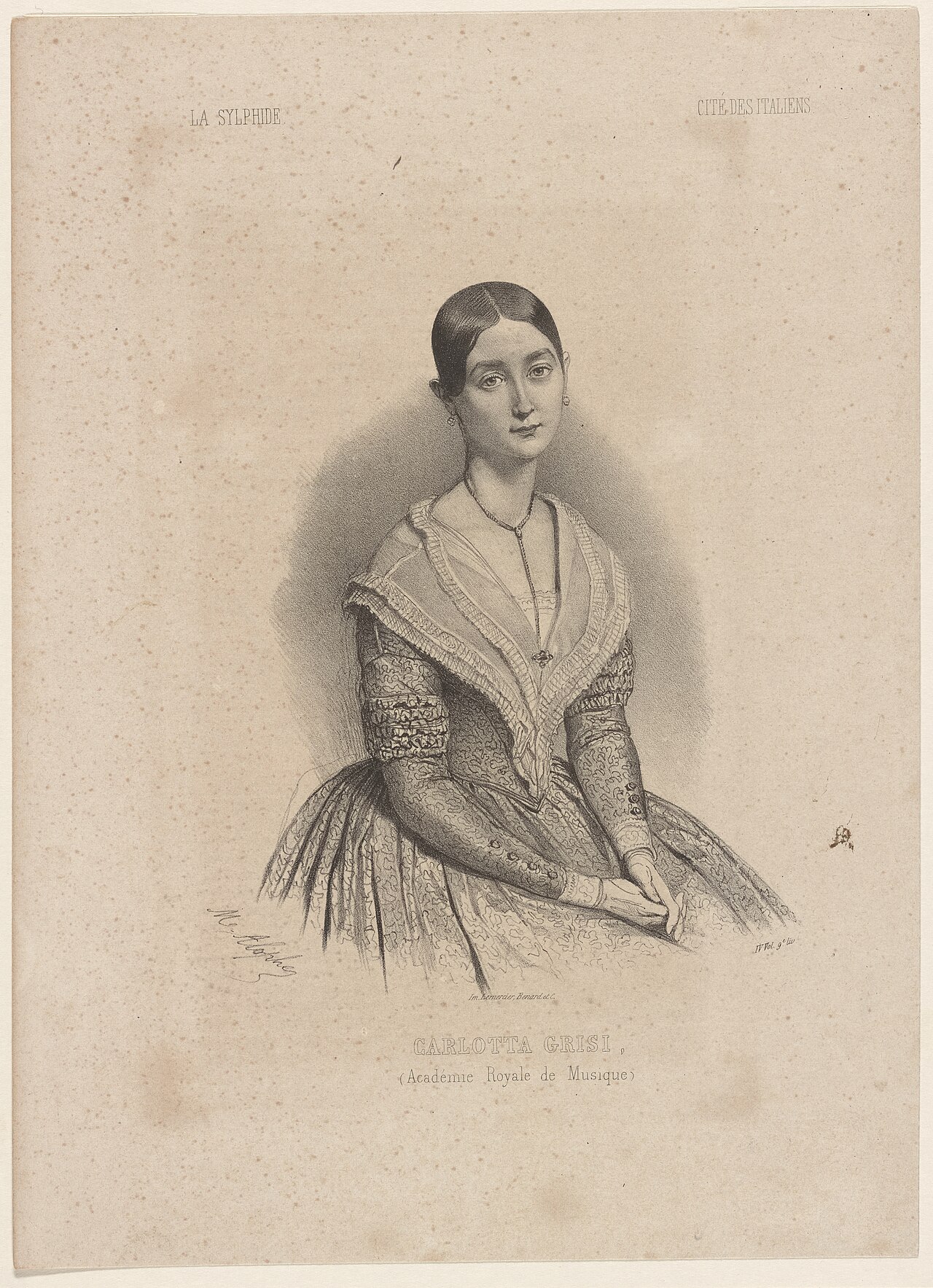
Grisi's greatest role was that of Giselle. The world première of this two-act ballet was on 28 June 1841 at the Théâtre de l'Académie Royale de Musique, Paris. The part of 'Albrecht' was danced by Lucien Petipa, with the part of Myrtha, Queen of the Wilis danced by Adèle Dumilâtre. It caused a sensation and inspired its reviewers to proclaim Giselle to be the greatest ballet of its time and a triumphant successor to the Romantic masterwork La Sylphide. It immediately established Grisi as a star in her very first full-length ballet in Paris. Her salary grew from 5,000 francs to 12,000 in 1842 and 20,000 by 1844, with additional performance fees on top. Dance historian Lillian Moore says of her: 'In Grisi were united all the best attributes of the other outstanding ballerinas of the romantic period: the buoyant elevation of Taglioni, the technical virtuosity and mimic powers of Elssler, and the joyous, exuberant facility of Cerrito. If she could not claim to surpass her peers in any one aspect of her art, Grisi outstripped them all in versatility.' Grisi's last performance in the west was in Paul Taglioni's Les Métamorphoses (a.k.a. Satanella, 1849). In 1850, she joined Perrot in St. Petersburg, Russia, where he had been appointed ballet master, and she danced Giselle at the Imperial Bolshoi Kamenny Theatre. She was prima ballerina of the St. Petersburg Imperial Theatres from 1850 to 1853, working not only with Perrot but also Joseph Mazilier who staged for her La Jolie Fille de Gand and Vert-Vert especially for her. In 1854, with her daughter, Julie-Marie, she left Russia for Warsaw, where she intended to continue dancing. But she became pregnant by Prince Léon Radziwill, who persuaded her to retire from ballet at the height of her fame. Grisi gave birth to her second daughter, Léontine Grisi, in 1855 and at the age of 34 settled in Saint-Jean, Geneva to live at Villa Grisi for the next 46 years of her life in peaceful retirement. She died there on 20 May 1899, at age 79.
Reader's Guide
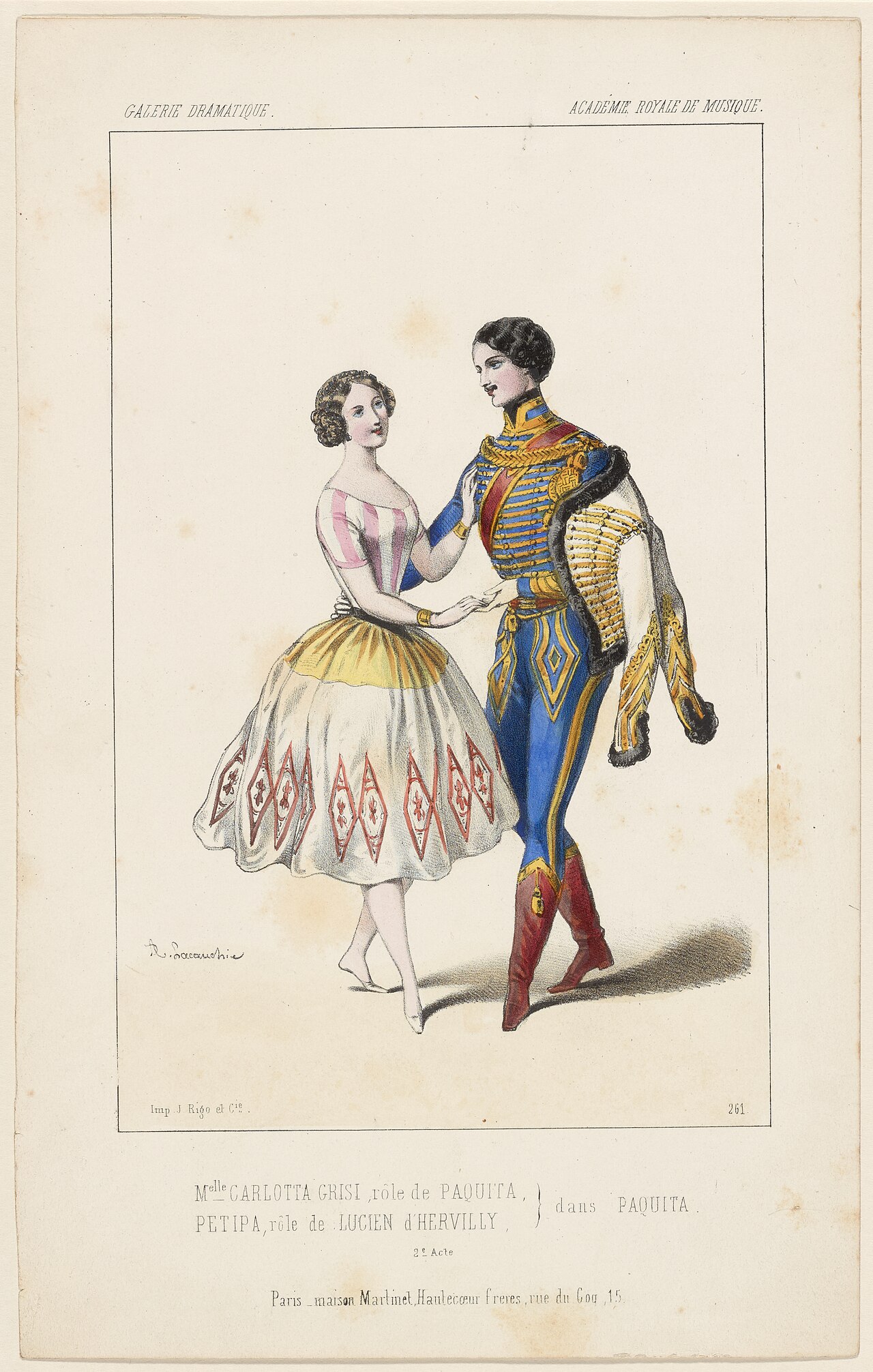
Carlotta Grisi's significance lies primarily in her creation of the title role in Giselle, a ballet that became a cornerstone of the Romantic repertoire and was hailed as a triumphant successor to La Sylphide. Dance historian Lillian Moore noted that Grisi united the best attributes of other outstanding ballerinas of the Romantic period: the elevation of Taglioni, the virtuosity and mimic powers of Elssler, and the facility of Cerrito, outstripping them all in versatility. Her career included creating roles in La Péri (dual role of Peri/Leila, 1843), Paquita (title role, 1844), and Le Diable à quatre (role of Mazourka, 1845), and she performed as the second ballerina in Pas de Quatre (1845). After retiring at the height of her fame in 1855, she lived in Saint-Jean, Geneva for 46 years until her death in 1899. Her legacy endures through Giselle, which remains a central work in ballet.
Did You Know?
- Carlotta Grisi was born Caronne Adele Josephine Marie Grisi on 28 June 1819 in Visinada, Kingdom of Illyria (present-day Vižinada, Croatia).
- Her salary for dancing Giselle grew from 5,000 francs to 12,000 in 1842 and 20,000 by 1844.
- She was the cousin of famous soprano singers Giuditta and Giulia Grisi.
- Grisi retired from ballet at the height of her fame in 1855 after becoming pregnant by Prince Léon Radziwill.
- She lived in peaceful retirement at Villa Grisi in Saint-Jean, Geneva for 46 years until her death on 20 May 1899.
Training and the Making of a Star
Carlotta Grisi entered the world on 28 June 1819 in Visinada, within the Kingdom of Illyria, a place that today sits in Croatia. Though neither of her parents worked in the theatre, she was raised in an environment steeped in operatic culture. Her formal training began at the ballet school of the Teatro alla Scala in Milan, and she later studied under the dancer and balletmaster Jules Perrot, who would become a defining figure in her professional life. Her London debut in 1836 saw her on stage alongside Perrot himself, and by 1840 she had reached the Théâtre de la Renaissance in Paris. Over the following years, the pair toured extensively across Europe—Paris, London, Vienna, Munich, and Milan—where Grisi both sang and danced. It was her dancing, however, that earned the acclaim of audiences and critics alike. By performing Perrot's choreography, which was attracting significant attention in the early 1840s, she distinguished herself as a versatile artist. Her repertoire of created roles included the title parts in Giselle (1841), Paquita (1844), and the dual role of Peri and Leila in La Péri (1843), as well as appearances in Pas de Quatre and Le Diable à quatre in 1845.
The Night That Changed Everything: Giselle's Premiere
On 28 June 1841, at the Théâtre de l'Académie Royale de Musique in Paris, a two-act ballet premiered that would reshape the history of dance. Carlotta Grisi created the title role of Giselle, dancing opposite Lucien Petipa as Albrecht, with Adèle Dumilâtre as Myrtha, Queen of the Wilis. The production was choreographed by Jules Perrot and Jean Coralli, with music by Adolphe Adam. The effect on the Parisian audience and press was immediate and electrifying. Reviewers declared Giselle the greatest ballet of its era and a triumphant successor to the Romantic landmark La Sylphide. For Grisi, this was her very first full-length ballet in Paris, and it instantly catapulted her to stardom. The financial proof of her rising fame was stark: her annual salary climbed from 5,000 francs to 12,000 by 1842 and reached 20,000 francs by 1844, with additional performance fees layered on top. Yet the triumph also marked the beginning of a shift in her professional relationship with Perrot, whose choreography had been central to her rise. The role of Giselle would remain inseparable from her name for the rest of her career and beyond.
Versatility and the Voices of Her Contemporaries
Dance historian Lillian Moore offered a striking assessment of Grisi's artistry, arguing that she combined the finest qualities of every great Romantic-era ballerina into a single performer. She possessed the light, soaring lift that characterized Taglioni, the technical brilliance and dramatic expressiveness of Elssler, and the exuberant, joyful ease of Cerrito. Moore concluded that while Grisi might not have dominated any single aspect of the art over her peers, she surpassed them all in sheer versatility. This view was echoed by Théophile Gautier, one of the creators of Giselle and the husband of Grisi's sister Ernestina, who described her dancing as marked by an unselfconscious, childlike simplicity and a warm, contagious joy. Grisi's versatility was also evident in her repertoire: she created the dual role of Peri and Leila in the oriental La Péri, the title role in Paquita, and the part of Mazourka in Le Diable à quatre, in addition to Giselle. She also appeared as second ballerina in the celebrated Pas de Quatre. Her family connections to the world of music were notable as well; she was the cousin of the famous soprano sisters Giuditta and Giulia Grisi, placing her within a broader circle of Italian performing talent.
Retirement and the Long Quiet Years
After a final western performance in Paul Taglioni's Les Métamorphoses in 1849, Grisi's career took a new direction in 1850 when she joined Perrot in St. Petersburg, where he had been appointed ballet master. She danced Giselle at the Imperial Bolshoi Kamenny Theatre, though the initial Russian response was muted since Fanny Elssler had previously established the role there. Over time, however, the Russian public came to appreciate her talents. She held the position of prima ballerina at the St. Petersburg Imperial Theatres from 1850 to 1853, working with both Perrot and Joseph Mazilier, who staged La Jolie Fille de Gand and Vert-Vert specifically for her. In 1854, she left Russia with her daughter Julie-Marie for Warsaw, intending to continue dancing. But she became pregnant by Prince Léon Radziwill, who persuaded her to retire at the height of her fame. She gave birth to her second daughter, Léontine, in 1855. At the age of thirty-four, Grisi settled in Saint-Jean, Geneva, at a residence known as Villa Grisi, where she spent the next forty-six years in peaceful retirement. She died there on 20 May 1899, at the age of seventy-nine.
Gallery
More in Ballet & Dance Masters 1-20
Spotted an error? Know more?
This is a living reference — every entry is fact-audited, and reader corrections feed straight into our audit queue. Suggest an edit · See this site's audit record